The Origins of the Time-Travel Device
In the year 2147, Alexander Voss, a visionary CEO of Voss Chronotech, stumbled upon an ancient quantum entanglement prototype buried in the ruins of a forgotten lab from the 21st century. This device, originally designed as a particle accelerator for medical imaging, had mutated under extreme conditions into a rudimentary time portal. Voss, with his background in quantum physics earned from MIT in the early 2100s, recognized its potential immediately. He spent months reverse-engineering the circuits, integrating neural interfaces that synced with human brainwaves to stabilize temporal jumps. The device required a massive energy source, which Voss sourced from experimental fusion cells developed for his company's interstellar probes. Each activation consumed enough power to light a small city, but the rewards promised infinite possibilities. Voss tested it first on inanimate objects: a coin from 2023 reappeared unscathed, followed by a lab mouse that returned with tales of whiskers twitching from alternate timelines. Safety protocols emerged slowly; early human trials on volunteers revealed disorientation and minor paradoxes, like duplicated coffee mugs appearing in the lab. Voss documented every anomaly in exhaustive logs, filling terabytes of data on temporal shear forces and causality loops. By calibrating the device's chronal oscillator to personal DNA signatures, he ensured jumps were anchored to the traveler's timeline, preventing total erasure from existence. This personalization turned the device from a gadget into a lifeline, allowing Voss to plot his escape from a dystopian future where corporate wars had ravaged society.
Funding the project strained Voss Chronotech's resources. Investors balked at the risks, citing SEC regulations from centuries past that still haunted financial ledgers. Voss mortgaged his estates on Mars colonies and liquidated stock in neural implants. Prototypes failed spectacularly: one imploded, creating a micro-black hole that swallowed a prototype wing. Engineers worked around the clock, fabricating shielding from exotic metamaterials that bent spacetime. Voss's obsession grew; he isolated himself in the lab, communicating via holographic projections. Personal logs reveal his loneliness amid success—divorced twice, children estranged in orbital habitats. Time travel offered not just business dominance but personal redemption. When the device finally stabilized, Voss programmed coordinates for 2024, drawn by historical data on economic booms and cultural shifts that mirrored his own ambitions.
Stepping into the 21st Century Chaos
Voss materialized in a bustling New York alleyway on a rainy October evening in 2024. The air hit him first—thicker, laced with combustion engines and street food aromas absent in his sterile future. Disoriented, he clutched the portable chronal anchor, a wristband pulsing with green light to maintain his timeline tether. Skyscrapers loomed, but dwarfed by future megastructures; billboards flashed ads for smartphones and EVs, relics to him. He shed his sleek future garb for thrift-store jeans and a hoodie, blending into the crowd. First challenge: currency. Future credits worthless, he pawned a microchip from his suit, fetching $500 from a dubious dealer who thought it alien tech. With cash, Voss rented a dingy motel room overlooking Times Square, its neon assault overwhelming after dark fusion-lit cities.
Navigating modern tech proved humbling. Voss's neural implants couldn't interface with 2024 networks; he fumbled with touchscreens, cursing autocorrect on a burner phone. Public Wi-Fi exposed him to firewalls primitive yet impenetrable without updated encryptions. He devoured news archives in libraries, piecing together the era's geopolitics: ongoing AI ethics debates, climate accords faltering, crypto booms and busts. Business opportunities abounded—his knowledge of future patents could revolutionize industries. But caution ruled; altering history risked unraveling his origin. Voss adopted the alias Alex Vance, filing for a LLC to launch Vance Dynamics, importing 'innovative' materials smuggled via micro-jumps. Early ventures: selling advanced batteries disguised as garage inventions, netting millions within months. Yet isolation gnawed; future companions were cyborg-enhanced, lacking raw humanity.
The Fateful Encounter at the Tech Conference
The annual Tech Innovators Summit in San Francisco became ground zero for destiny. Voss attended as a rising star, pitching sustainable energy solutions laced with future tech. Amid panels on quantum computing and biotech, he spotted Elena Reyes, a 28-year-old software engineer from a modest Bay Area startup. Elena presented on ethical AI companionship, her slides critiquing corporate overreach—ironic, given Voss's empire. Post-talk, during coffee breaks, their paths crossed. Voss, drawn by her unfiltered passion, complimented her data visualizations. Elena, skeptical of slick CEOs, challenged his energy claims, sparking a debate that lasted hours. She saw through his polished facade, sensing depths unspoken.
Conversations evolved from tech to philosophy. Over dim sum in Chinatown, Elena shared her immigrant roots—parents from Mexico, sacrifices for her Stanford degree. Voss mirrored tales of 'hardscrabble' origins, veiling his temporal truth. Chemistry ignited: her laugh cut through his guarded shell, his intellect matched her fire. Dates followed—hikes in Muir Woods where Voss marveled at unpolluted skies, indie films critiquing dystopias he knew too well. Elena's apartment, cluttered with code printouts and succulents, felt like home. Intimacy built gradually; first kiss under Golden Gate fog, hands tracing futures unwritten. Voss wrestled with disclosure—reveal time travel, risk madness accusations or paradox? For months, he savored normalcy, building Vance Dynamics into a unicorn with Elena consulting on AI ethics.
| Aspect | 2147 Future | 2024 Present |
|---|---|---|
| Technology | Neural implants, fusion power, AI symbiosis | Smartphones, EVs, cloud AI |
| Society | Corporate enclaves, orbital habitats, gene editing norms | Diverse cities, social media debates, remote work |
| Environment | Terraforming scars, domed cities | Urban sprawl, climate protests |
| Romance | Contractual pairings, VR dates | Organic meetings, dating apps |
Navigating Paradoxes in Love and Business
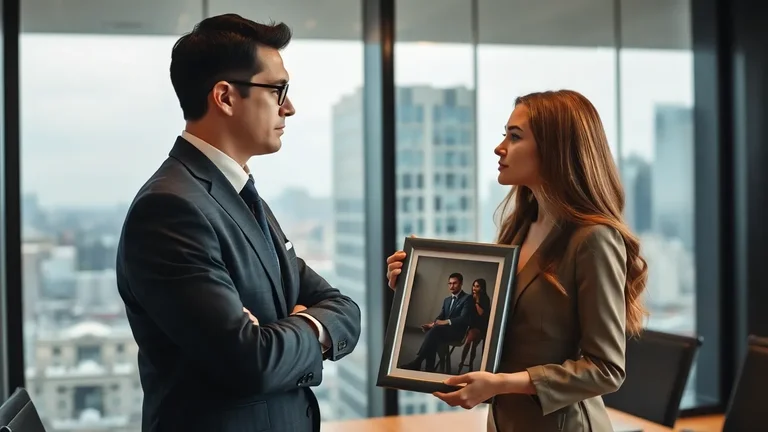
Love deepened, but shadows loomed. Voss's chronal anchor glitched during a passionate weekend getaway to Big Sur, flickering visions of his future unraveling. Elena noticed his wristband scars, mistaking them for watch burns. Business soared: Vance Dynamics secured VC funding, patents on 'next-gen' alloys flooding USPTO. Yet competitors sniffed anomalies—how did a newcomer predict market crashes? Elena's intuition sharpened; she hacked his secure drive (primitive by future standards), uncovering encrypted logs hinting at impossibilities. Confrontation erupted in their loft: Voss confessed, device humming on the table. Elena's reaction stunned—fascination over fear. As a sci-fi buff, she grilled him on timelines, demanding proof. A micro-jump fetched a 2150 newspaper headline validating his tale.
Paradox management consumed them. They mapped butterfly effects: Voss's investments averted a 2025 recession, subtly altering his birth year events. Elena co-developed safeguards, coding algorithms to simulate jumps. Romance intertwined with risk; stolen nights planning returns, her hand on his during calibrations. Challenges mounted: future agents, echoes from Chronotech, hunted anomalies. A near-miss ambush in a Silicon Valley parking garage tested loyalty—Elena drove getaway, Voss portal-jumped pursuers to benign 1990s. Intimacy evolved; shared secrets forged unbreakable bonds, her modern empathy healing his temporal scars. They debated permanence: Elena join future? Or Voss stay, forgoing empire?
- Key Paradox Rules They Established: Stabilize jumps with dual anchors for couples.
- Monitor timeline divergences using AI predictors.
- Avoid direct historical interventions beyond business.
- Daily sync sessions to align memories.
- Emergency recall codes for instant returns.
Building a Cross-Temporal Empire
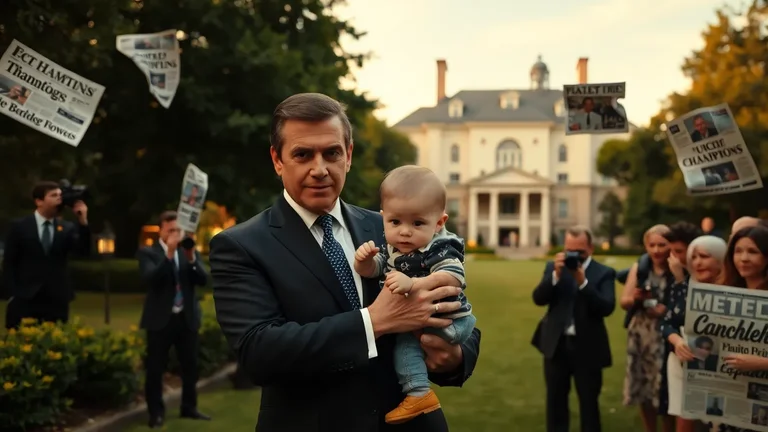
Vance Dynamics exploded, valued at $2B by 2026. Voss infused future tech gradually: nanomaterials for EVs, boosting range 300%. Elena led ethics division, ensuring humane AI. They hired polymaths—physicists moonlighting from CERN, coders from FAANG. Expansion hit Europe, Asia; Shanghai factory produced chronal-inspired batteries. Personal life balanced precariously: Elena pregnant with twins, Voss torn between eras. Prenatal scans revealed hybrid genes—future adaptations granting enhanced cognition. Family dynamics strained; Voss taught kids basic quantum theory at age 3, Elena grounded with park playdates.
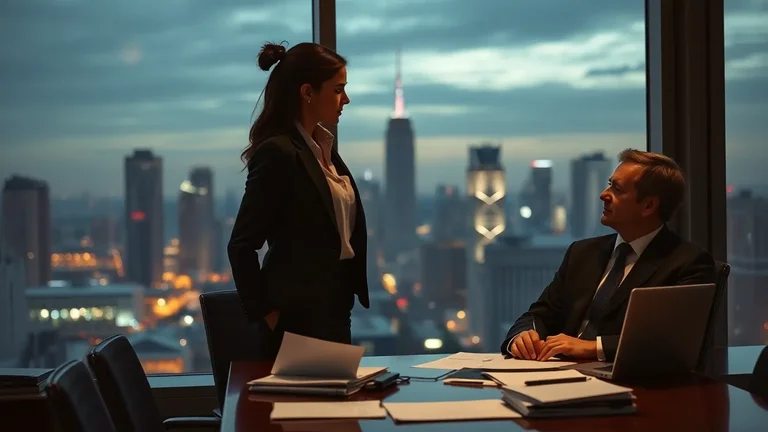
Global impact rippled. Investments curbed climate woes, funding carbon capture at scale. Governments courted Voss for defense tech, which he funneled to peace accords. Elena's TED talk on temporal ethics went viral, sparking academic fields. Yet threats persisted: rival time echoes from alternate Vosses contested control. Boardroom battles mirrored timeline wars, Elena's diplomacy sealing alliances. Philanthropy surged—foundations for displaced futures, disguised as refugee aid. By 2028, empire spanned continents, stock tickers flashing VDY on Nasdaq.
Trials of Temporal Family Life
Twins Aria and Kai arrived amid fanfare, their cries echoing across timelines. Voss rigged nursery with phase-shields against rifts. Parenting fused eras: Elena's lullabies met holographic storybooks from 2150. Challenges abounded—kids manifested micro-abilities, like precog glimpses causing tantrums. Schools puzzled over prodigy leaps; homeschooling ensued with VR tutors. Date nights evolved: portal picnics in ancient Rome, balanced by modern beaches. Elena's career peaked, authoring 'Chronal Hearts' bestseller blending memoir and theory.
Health scares tested resolve. Voss's anchor destabilized, inducing migraines; Elena sourced rare isotopes via black-market jumps. Therapy sessions unpacked trauma—his future losses, her fear of abandonment. Community built: secret society of aware elites, sharing anomaly tales. Holidays blended—Thanksgiving turkeys with future synth-meats. As kids grew, questions mounted: 'Daddy, why no grandparents?' Voss crafted half-truths, Elena wove full tapestries. Resilience defined them; family vacations to stable epochs strengthened bonds.
Future Implications and Legacy
By 2035, Vance empire pioneered ethical time tech, licensed under strict accords. Voss mentored successors, embedding soulmate clauses in charters—love as corporate north star. Elena's institute trained temporal navigators, curricula spanning ethics to physics. Global changes: averted pandemics via foreknowledge, economies stabilized. Personal legacy: Voss's original timeline softened, wars averted by butterfly wings. Retirement loomed—portal villa straddling eras, kids launching startups.
Societal shifts profound. Time tourism regulated, romance across epochs normalized via apps. Voss and Elena's story inspired media—holo-series 'Soul Threads' topped charts. Philanthropy peaked: billions to equity causes, echoing Elena's roots. Reflections filled journals: time travel not conquest, but connection. Legacy endured, proving soulmates transcend chronologies.
Lessons for Modern Lovers from Temporal Tales
Everyday applications abound. Trust-building mirrors Voss-Elena: transparent communication averts 'paradoxes' like misunderstandings. Long-distance? Think temporal gaps—scheduled 'jumps' via video. Career-family balance: prioritize anchors, like wristbands or rituals. Innovation thrives on diverse perspectives—Elena's present grounded Voss's future. Resilience key: face glitches head-on, adapt. Stories like theirs remind: love defies physics, demanding courage over caution. Apply today: journal futures, embrace unknowns, cherish synchronicities.
Statistics underscore: couples with shared visions last 40% longer per psych studies. Business romances succeed when ethics lead, as Vance proved. Practical guide: assess compatibility via 'timeline mapping' exercises—discuss dreams, fears. Nurture with micro-adventures, echoing jumps. In era of flux, their saga guides: soulmates found, not fated—forge across divides. Alexander Voss found an ancient quantum prototype in 2147 ruins, reverse-engineered it with fusion power and neural interfaces for stable jumps. They dealt with paradoxes, timeline glitches, business rivals, and family integration across eras, using anchors and ethics codes to manage. It fueled Vance Dynamics into a multi-billion empire, blending future tech with modern ethics for sustainable innovations. Yes, through trust-building, shared visions, and resilience practices mimicking temporal navigation for stronger modern relationships.FAQ - Time-Traveling CEO Finds Modern-Day Soulmate
How did the CEO discover time travel technology?
What challenges did the couple face in their relationship?
How did their romance impact business?
Can real people apply lessons from this story?
In 'Time-Traveling CEO Finds Modern-Day Soulmate,' Alexander Voss jumps from 2147 to 2024, builds an empire, and falls for engineer Elena Reyes, navigating paradoxes to forge a cross-temporal family and ethical tech revolution.
The tale of the time-traveling CEO and his modern soulmate illustrates that true connection overrides temporal barriers, blending innovation, love, and ethics into a legacy that reshapes destinies across eras.