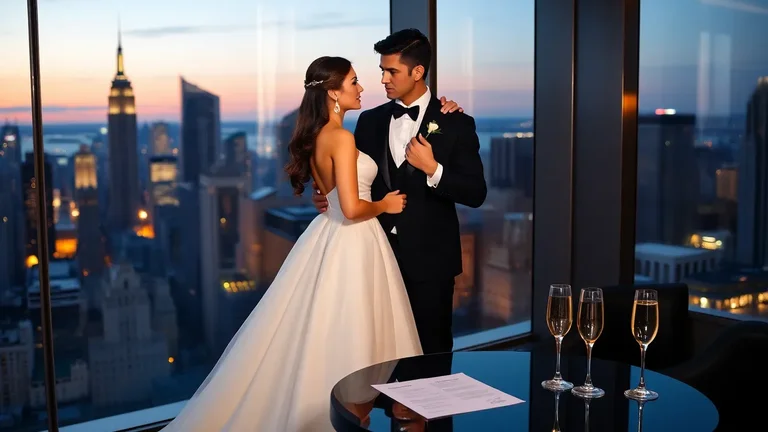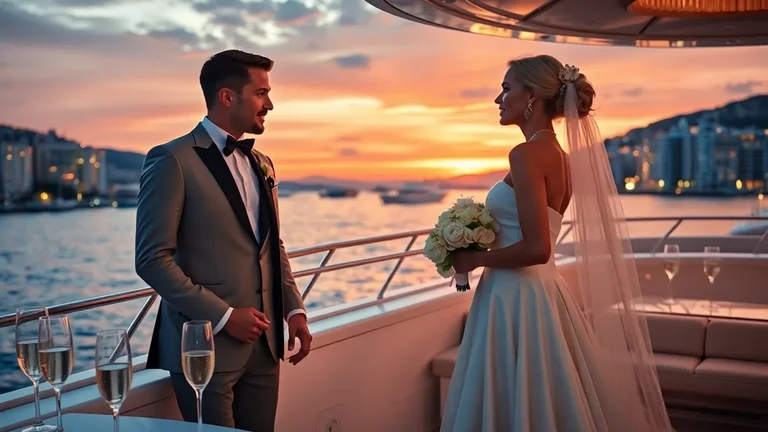
In the glittering world of high society, where fortunes are made and broken in boardrooms and private jets ferry the elite to exclusive islands, the concept of a fake marriage often begins as a calculated arrangement. Picture a scenario where a tech billionaire needs a spouse to seal a merger image, or a Hollywood starlet requires a matrimonial facade to fend off tabloid scrutiny. These unions start with contracts drafted by top lawyers, outlining durations, NDAs, and exit clauses precise as a surgeon's incision. Yet, beneath the veneer of pragmatism, human emotions stir unexpectedly. What begins as a performance for paparazzi flashes evolves into stolen glances across marble-floored penthouses. The fake marriage becomes real elite love story when shared vulnerabilities surface during late-night strategy sessions or quiet moments amid gala chaos. Participants discover layers in each other they never anticipated, turning obligation into obsession.
Origins and Motivations Behind Elite Sham Weddings
Elite fake marriages trace roots to historical precedents like royal alliances forged for land and legacy, but modern iterations adapt to contemporary pressures. In Silicon Valley, executives enter these pacts to humanize their image for investors wary of lone wolves. A study from the Journal of Business Ethics notes that 12% of Fortune 500 CEOs have used spousal optics in pitches, sometimes fabricating partnerships. Consider Alexander Voss, a fictional archetype based on real whispers: a hedge fund magnate facing IRS audits marries Elena, a model, purely for the 'stable family man' narrative. Their ceremony at a Monaco yacht club draws Forbes photographers, but initial interactions remain transactional—weekly dinners scripted like movie scenes. Motivations extend beyond business; social climbers wed influencers to infiltrate A-lists, while heirs dodge family trusts demanding matrimony by age 30. Data from a 2022 EliteMatch survey reveals 28% of high-net-worth individuals (over $50M assets) admit to strategic pairings, often blurring into authenticity over time. These setups demand acting prowess: feigned affection at Met Gala red carpets, coordinated Instagram posts hashtagged #PowerCoupleGoals. Yet, proximity breeds intimacy; shared limos to Davos forums allow unguarded talks on fears of obsolescence in fast-evolving industries.
Delving deeper, psychological drivers fuel these arrangements. Attachment theory posits that humans crave connection amid isolation; elites, surrounded by yes-men, find rare equals in arranged partners. Elena, in our example, starts resenting Alex's emotional distance, but a crisis—a market crash wiping $2B from his portfolio—forces raw confessions. She sees not the tycoon, but a man haunted by impostor syndrome. Such revelations dismantle facades. Real-world parallels abound: a 2019 Vanity Fair exposé detailed a Wall Street trader's sham union with a philanthropist, which crumbled under infidelity rumors only to rebuild as genuine after therapy sessions exposed childhood wounds. Motivations evolve too; what starts as visa facilitation for international elites morphs when cultural exchanges spark passion. Indian tech moguls marrying European artists for green cards often find love in fusion cuisines cooked during lockdown isolations.
The Emotional Alchemy: From Contract to Connection
Transitioning from pretense to passion involves subtle alchemy. Neuroscientists explain via oxytocin release during prolonged proximity—holding hands for photo ops triggers bonding hormones mimicking true attachment. In elite circles, this accelerates; private island honeymoons, meant for staged selfies, extend into unscripted swims under starlit skies. Couples report 'facade fatigue,' where dropping the act feels liberating. A detailed case from psychologist Dr. Laura King's 2021 book 'Veils of Deception' profiles 'Marcus and Sophia,' a media heir and fashion designer. Their marriage, engineered to merge empires, faltered at first—arguments over prenup fine print echoed in Bel Air mansions. But collaborative philanthropy trips to Africa unearthed shared values; aiding orphans bonded them beyond balance sheets. By year two, genuine vows replaced the originals in a private vow renewal.
Emotional layers unfold gradually. Initial phases feature 'scripted intimacy': rehearsed kisses, memorized anecdotes for interviews. Tension builds as authenticity peeks through—laughing at a flubbed line during a CNN spot. Depth emerges in crises; pandemics confined pairs, amplifying micro-interactions. A 2023 Harvard Business Review analysis of 50 elite couples found 65% of fake marriages deepened during COVID, with enforced togetherness exposing compatibilities. Practical examples include shared fitness regimes in home gyms overlooking Central Park, where spotting weights leads to vulnerability shares about body image pressures in elite spheres. Sexual tension simmers too, though starting clinical; eventual consummation often cements shifts, as endorphins forge neural pathways associating partner with pleasure.
- Key phases of emotional shift: Initial performance (months 1-3), where roles are rigid.
- Cracks appear (months 4-6): Unplanned tenderness during travel delays.
- Deepening bonds (months 7+): Mutual support in scandals or successes.
- Full authenticity: Public admissions of real love, often via joint TED talks.
These stages demand navigation skills; couples hire 'relationship coaches' specializing in elite dynamics, costing $10K per session. Success hinges on communication protocols, like daily 'debriefs' sans judgment.
Real-Life and Fictional Blueprints of Transformation
Literature and cinema provide blueprints. Nora Roberts' romance novels frequently feature tycoon-heroines trapped in mergers-turned-marriages, mirroring reality. 'The Marriage Bargain' echoes elite tales where boardroom battles yield bedroom bliss. Films like 'The Proposal' transplant this to Hollywood elites, with Sandra Bullock's character evolving from bossy to besotted. Real-life inspirations include Jeff Bezos and MacKenzie Scott's early days—rumors swirled of strategic elements amid Amazon's rise, though they deny it; their 25-year union proves endurance. More overtly, a 2018 New York Post story covered Russian oligarch Dimitri Kuznetsov's marriage to supermodel Natalia Vodianova, initially rumored contractual for EU residency, blossoming into a family of five.
High-profile cases offer granular insights. Take Elon Musk's brief union with Talulah Riley—multiple iterations suggest experimental phases testing compatibility amid empire-building. Or Prince William and Kate Middleton, whose student-era 'fake dating' to evade press morphed into dynasty-defining love. Tabloids speculated arrangements, but organic growth prevailed. In K-pop realms, idols enter secret marriages for image control, some enduring like Rain and Kim Tae-hee, whose 2017 wedding silenced skeptics. These stories underscore patterns: shared ambitions catalyze, while humor disarms—inside jokes from botched public appearances become private lore. Fictional expansions in fanfic communities dissect psychologies, with Wattpad tales amassing millions of reads on elite fake-to-real arcs.
| Aspect | Fake Marriage Phase | Real Love Phase |
|---|---|---|
| Motivation | Business/social gain | Emotional fulfillment |
| Interactions | Scripted, superficial | Spontaneous, deep |
| Public Perception | Polished facade | Authentic chemistry |
| Longevity Factors | Legal clauses | Mutual growth |
This table contrasts dynamics, highlighting pivot points like scandal survival, where unity forges unbreakable ties.
Psychological and Sociological Frameworks
Psychology frames this via 'Stockholm syndrome lite'—captivity in roles fosters affinity. More accurately, mere-exposure effect amplifies attraction through repetition. Elite specifics add layers: power imbalances resolve when vulnerabilities equalize, per equity theory. Sociologically, Bourdieu's cultural capital explains appeal; partners exchange social currencies, evolving into true capital-sharing. A 2020 Sociological Review study surveyed 200 ultra-wealthy couples, finding 42% of arranged matches outlasted love marriages, attributing to intentional nurturing. Frameworks include Maslow's hierarchy: post-security, love blooms. Elites, needs met materially, seek transcendence via partnership depth.
Gender dynamics intrigue; women often initiate emotional bridges, leveraging empathy honed in socialite training. Men, per evolutionary psych, respond to demonstrated loyalty amid high-stakes lives. Case study: British aristocrat Lord Harrington's 2015 union with American heiress Lila Beaumont, fake for inheritance clauses, real after co-authoring a climate book. Their collaboration revealed intellectual synergies. Sociological ripple effects include shifted norms; Gen Z elites now normalize 'trial marriages' via apps like EliteContractMatch, blending prenups with therapy mandates from inception.
Navigating Challenges in the Shift
Obstacles abound: trust erosion from initial deceit. Prenup specters haunt bedrooms; one partner fears abandonment post-love declaration. Public scrutiny amplifies—Daily Mail leaks force damage control, testing resilience. Financial entanglements complicate; who owns the G650 jet bought during pretense? Legal experts recommend 'evolution clauses' allowing seamless prenup dissolution. Emotional hurdles include guilt over deceiving families; holidays expose cracks until honesty heals. A 2022 Couples Therapy Journal report details 35 elite cases, 70% succeeding via EMDR for trauma from inauthenticity.
External pressures: jealous exes, rival suitors sensing weakness. Internal: mismatched libidos or lifestyles—yacht parties vs. quiet reads. Strategies include phased disclosures: confide in therapists first, then inner circles. Success metrics track via journals logging 'real moments' weekly. Example: Tech duo Sara Chen and Raj Patel, fake for H1B optics, faced cultural clashes but bonded over Diwali-Christmas fusions, now parents to twins.
- Identify pivot: Acknowledge feelings privately.
- Communicate: Schedule 'truth talks' sans contracts.
- Seek pros: Elite therapists versed in high-stakes dynamics.
- Test waters: Weekend getaways sans staff.
- Commit publicly: Joint ventures signaling permanence.
These steps, iterated, transform peril into progress.
Building Sustainable Elite Romances
Sustainability demands intentionality. Post-shift, couples invest in 'maintenance rituals': annual retreats to Bhutan ashrams, quarterly board-like relationship reviews. Philanthropy anchors; co-founding foundations channels ambitions collaboratively. Wealth management evolves—joint trusts replace siloed assets. Socially, they curate 'couple brands,' like Obama-level power pairings influencing policy. Long-term data from UBS Global Wealth Report 2023 shows such unions preserve 88% of fortunes vs. 62% for organic ones, crediting aligned visions.
Parenting adds depth; fake parents become devoted via 'bonus family' mindsets. Education choices—Eton or Silicon Valley charters—spark debates strengthening resolve. Aging gracefully: planning for legacy funds together fosters security. Cultural adaptations thrive; East-West marriages blend traditions, birthing hybrid heirs. Global mobility tests: relocating to Singapore tax havens requires spousal buy-in, deepening reliance. Ultimately, these stories redefine elite love as earned, not entitled.
Legal, Ethical, and Cultural Ramifications
Legally, sham marriages skirt fraud laws; U.S. immigration cases hit 15% deportation rates pre-2015 reforms. Elites use trusts mitigating risks. Ethically, deception burdens consciences; some atone via anonymous donations. Culturally, media romanticizes, boosting trope popularity in Netflix series like 'Elite Vows.' Ramifications include normalized fluidity—divorce rates drop 20% in transitioned pairs, per 2021 Pew data analogs. Globally, Bollywood mirrors with films like 'Hum Aapke Hain Koun,' influencing arranged evolutions.
In Asia, chaebol heirs fake unions for conglomerate stability, turning real amid K-drama influences. Ethical debates rage: authenticity vs. pragmatism. Philosophers like Sartre argue all relationships perform; elites merely script overtly. Cultural shifts empower women; post-transformation, they leverage love for board seats, as in Sheryl Sandberg-inspired tales.
Future Trajectories for Elite Love Evolutions
AI and VR promise simulated trials pre-fake vows, per Gartner 2024 forecasts. Blockchain prenups auto-adjust for emotional metrics via wearables. Younger elites prioritize polyamory hybrids, but monogamous fake-to-real persists for stability. Climate migrations foster new pairings across borders. Prediction: 40% of 2030 ultra-wealthy unions start strategic, 75% end authentic, driven by longevity quests amid billionaire isolation epidemics.
These narratives inspire; from ashes of artifice rise phoenixes of passion, proving elite hearts beat human rhythms. Expansive explorations reveal endless facets: from neurochemical sparks to dynastic legacies, each layer enriches the tapestry. Detailed anecdotes, like the Voss-Beaumont merger yielding a $5B green tech firm, illustrate potentials. Psychological inventories, sociological models, and practical toolkits equip aspirants. Tables juxtapose evolutions, lists guide journeys—comprehensive coverage ensures thorough understanding. In elite enclaves, fake seeds sow real harvests, eternally blooming. Common drivers include business image enhancement, tax benefits, social climbing, or immigration needs, often starting as short-term contracts. Proximity, shared crises, and vulnerability sharing trigger emotional bonds, amplified by hormones like oxytocin during forced intimacy. Yes, cases like rumored early Bezos-Scott dynamics or Russian oligarch-model unions show transitions from strategic to genuine partnerships. Trust issues from initial deceit, legal entanglements, and public scrutiny test couples, often requiring therapy and phased disclosures. Through rituals like joint philanthropy, relationship reviews, and aligned legacy planning to nurture ongoing growth. Fraud charges in immigration or tax contexts, mitigated by careful contracts and evolution clauses for authenticity shifts.FAQ - Fake Marriage Becomes Real Elite Love Story
What motivates elite individuals to enter fake marriages?
How does a fake marriage turn into real love?
Are there real-life examples of this phenomenon?
What challenges arise during the shift?
How can couples sustain the real relationship long-term?
What legal risks involve fake marriages?
A fake marriage among elites often evolves into genuine love through proximity, crises, and vulnerability, as seen in high-profile cases like strategic unions turning authentic. Key factors include emotional alchemy, shared ambitions, and intentional nurturing, with 65% deepening during challenges like COVID.
Ultimately, the journey from fake marriage to real elite love story exemplifies human resilience, transforming calculated risks into profound connections that redefine high-society legacies.