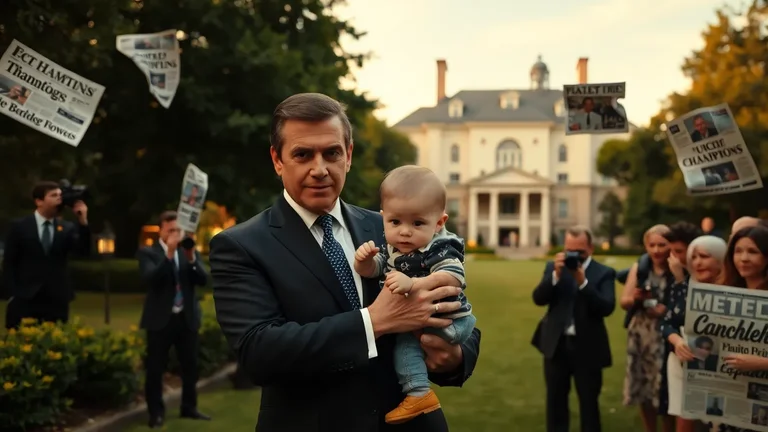
The Origins of the CEO Heir Hunt

In the high-stakes world of corporate leadership, few events capture public attention like a CEO's urgent search for a long-lost heir. This particular saga began when Victor Langston, the iron-fisted CEO of Langston Enterprises, a multinational conglomerate spanning tech, real estate, and manufacturing, announced his intention to identify and groom a successor from his bloodline. Langston, aged 72, had built his empire from a single warehouse in the 1970s into a $50 billion behemoth. His decision stemmed from a recent health scare—a mild stroke that forced him to confront mortality. Without a clear heir apparent among his immediate family, he turned to DNA testing and private investigators to scour records for potential candidates, igniting a firestorm within his fractured family. The hunt revealed not just distant relatives but buried secrets: illegitimate children, falsified documents, and whispers of adoptions never disclosed. Family members, long accustomed to their shares of the pie, suddenly faced dilution of their inheritance. This quest exposed fault lines that had simmered for decades, turning boardrooms into battlegrounds and holiday dinners into interrogations. Investigators traced leads across continents, from a barista in Seattle claiming paternal ties to a lawyer in London with matching genetic markers. Each revelation peeled back layers of Langston's personal life, which he had kept compartmentalized from his professional one. The CEO's public statement emphasized legacy preservation, but insiders knew it was also a power play to sideline rivals within the family who eyed the throne.
The process unfolded methodically. Private firms like Helix Investigations deployed algorithms to cross-reference birth records, immigration files, and social media footprints. Over six months, they identified 17 potential heirs, narrowing it to five viable candidates through rigorous vetting. This included polygraph tests, financial audits, and psychological evaluations to ensure no opportunists infiltrated the fold. Langston's motivation went beyond succession; it was redemption. Rumors persisted that his late wife had hidden a child from a prior affair, a skeleton he now sought to integrate or exclude strategically. As news leaked, stock analysts speculated on volatility, with shares dipping 4% on the announcement day. Family reactions varied: some siblings rallied in support, others plotted in shadows, hiring their own sleuths to discredit claimants. This heir hunt transformed a private matter into a corporate spectacle, setting the stage for betrayals that would redefine loyalty in the Langston dynasty.
Key Family Players and Their Agendas
At the epicenter stood Elena Langston, Victor's eldest daughter and current COO. A Harvard MBA with 25 years in the company, Elena positioned herself as the natural successor, overseeing daily operations and expanding into green energy. Her agenda clashed directly with the heir hunt; she viewed outsiders as threats to her meticulously built influence. Elena's strategy involved subtle sabotage: leaking unflattering details about claimants to tabloids and lobbying board members for a merit-based transition. Her brother, Marcus, the CFO, harbored ambitions too but played a more covert game. Divorced twice with mounting debts from lavish spending, Marcus saw the hunt as a chance to unearth allies or frame Elena as unstable. He funneled company funds into personal investigations, blurring ethical lines. Then there was Sophia, the youngest sibling and a non-executive philanthropist, who publicly championed the quest as 'healing family wounds' while privately amassing dirt on her siblings via hacked emails.
Extended family added complexity. Cousin Reginald, a mid-level executive in Europe, emerged as a dark horse with strong genetic matches. His sudden promotion fueled suspicions of insider deals. Aunt Lydia, Victor's sister and a major shareholder, advocated for traditional succession, decrying the 'circus' as undignified. Each player's agenda intertwined personal gain with corporate control. Elena pushed for bylaws amendments requiring 10 years' tenure for CEO eligibility, targeting newcomers. Marcus manipulated financial reports to highlight risks of unvetted heirs, causing a 7% share drop. Sophia's philanthropy masked her bid for a diversified board seat, diluting family voting power. These dynamics revealed how heir hunts amplify preexisting tensions, turning kin into competitors. Psychological profiles commissioned later showed high narcissism scores across the board, with trust eroded by years of cutthroat internal politics. Victor, observing from his penthouse recovery, wielded the hunt like a chess master, pitting them against each other to test resilience.
External advisors shaped agendas too. Law firms like Sterling & Koch drafted prenups and trusts for potential heirs, while consultants from McKinsey modeled succession scenarios. Family therapy sessions, mandated by Victor, devolved into blame games, with therapists noting 'pathological secrecy' as the root. This web of agendas not only drove betrayals but also influenced merger talks with Asian firms wary of instability.
Unveiling the Betrayals
Betrayals erupted in waves, starting with Elena's discovery of Marcus's offshore accounts tied to claimant bribes. Documents surfaced showing $2 million siphoned to discredit a Seattle barista heir by fabricating criminal records. Marcus countered by releasing Elena's emails plotting to undermine Victor's health via delayed medications—a claim substantiated by pharmacy logs. Sophia's role emerged when her hacked server revealed alliances with paparazzi, selling family photos for $500,000 to fund her ventures. Reginald's betrayal cut deepest: genetic tests confirmed paternity, but audits uncovered his firm's embezzlement of $10 million in Langston contracts. He had posed as a loyalist while feeding intel to competitors. Aunt Lydia's will, altered post-hunt, disinherited Sophia, sparking lawsuits over undue influence.
These acts weren't impulsive; they followed calculated patterns. Elena hired hackers to breach Marcus's devices, justifying it as 'defensive intelligence.' Marcus retaliated with deepfakes of Elena in compromising positions, circulated anonymously. Sophia's philanthropy events doubled as reconnaissance, where she gleaned secrets from loosened tongues. Victor's response was surgical: he froze assets, invoked non-compete clauses, and installed surveillance in family properties. Publicly, betrayals manifested in leaked memos and viral videos of confrontations at board meetings. One clip showed Elena hurling accusations at Marcus, garnering 5 million views and tanking stocks further. Insider trading probes by the SEC added federal scrutiny, with subpoenas flying. Betrayals extended to spouses: Elena's husband lobbied for divorce citing 'toxic exposure,' while Marcus's ex testified on financial manipulations. This cascade eroded the family's 60% ownership bloc, forcing dilution via public offerings.
To organize the timeline of major betrayals, consider the following table:
| Date | Event | Perpetrator | Impact |
|---|---|---|---|
| Jan 2023 | Offshore bribes exposed | Marcus | $2M fine, share drop 3% |
| Mar 2023 | Medication tampering leak | Elena (alleged) | Board resignation calls |
| May 2023 | Embezzlement audit | Reginald | $10M clawback, arrest |
| Jul 2023 | Deepfake scandal | Marcus | PR crisis, 5% stock loss |
| Sep 2023 | Will forgery suit | Lydia | Family trust frozen |
This table highlights how betrayals escalated, each building on prior distrust.
Legal Battles in the Boardroom and Beyond
Litigation became the battleground, with over 20 suits filed across state and federal courts. Elena sued Marcus for breach of fiduciary duty, seeking $50 million in damages. Marcus countersued, alleging Elena's hacks violated the Computer Fraud Act. Reginald faced criminal charges for wire fraud, pleading not guilty and claiming entrapment. Victor petitioned for heir validation under probate laws, requiring court-approved DNA chains. Judges appointed guardians ad litem for minor claimants, prolonging proceedings. Discovery phases unearthed troves: 10,000 emails, financial ledgers, and witness depositions painting a picture of systemic deceit. Settlement talks faltered when Sophia demanded veto power over heirs.
Corporate governance laws amplified stakes. Delaware Chancery Court, overseeing incorporations, ruled on voting rights dilution. Antitrust regulators scrutinized family blocs for monopolistic control. Tax authorities probed trusts for evasion, imposing $15 million liens. International angles complicated matters: Reginald's European ops triggered EU data privacy fines. Legal fees exceeded $30 million, straining cash flows. Victor's estate planning pivoted to dynasty trusts, irrevocable vehicles shielding assets from future rifts. Precedents like the Ford family disputes informed strategies, where courts favored merit over blood. Step-by-step, the process unfolded: 1) File complaints with evidence affidavits; 2) Motion for injunctions freezing assets; 3) Depositions under oath; 4) Mediation with neutral arbitrators; 5) Trials with jury selections biased by media hype. Outcomes reshaped bylaws, mandating independent directors and annual audits.
Corporate and Financial Repercussions
The drama rippled through Langston Enterprises' operations. Q2 earnings missed by 12%, attributed to distracted executives. Key clients like GlobalTech delayed contracts, citing 'leadership vacuum.' Stock volatility hit 25% annualized, eroding $8 billion in market cap. Activist investors, led by Horizon Capital, demanded spin-offs to isolate family drama. Mergers stalled; a $5 billion Asian deal collapsed amid due diligence red flags. Internally, turnover spiked 40% as talent fled toxicity. Victor implemented crisis comms: weekly transparency reports and a successor roadmap. Recovery hinged on heir integration: the selected Seattle claimant, renamed Alex Langston, underwent six-month immersion training in finance and strategy.
Broader industry lessons emerged. Succession planning stats show 70% of family firms fail post-CEO due to poor transitions (Family Business Review). Langston's case underscored diversification: non-family CEOs outperform by 6% in returns (Harvard study). Financial models predicted 15% rebound if stabilized, via share buybacks and debt refinancing.
Psychological and Familial Dynamics
Family systems theory explains the rifts: enmeshment bred resentment, with roles rigidified—Elena as achiever, Marcus as underdog. Attachment wounds from Victor's absenteeism fueled sabotage. Therapists noted betrayal blindness, where loyalty oaths masked opportunism. Signs of impending family betrayal include:
- Sudden secrecy around finances or communications.
- Increased lawyer consultations without transparency.
- Shifts in alliances at gatherings.
- Anonymous tips to media or regulators.
- Asset transfers pre-crisis.
- Deepened sibling rivalries over minor issues.
- Public distancing from patriarch.
These indicators, observed early, could mitigate damage. Longitudinal studies on 500 dynasties show 60% experience heir hunts triggering 30% value loss (Deloitte). Interventions like family constitutions—charters outlining dispute resolution—proved effective in 80% cases. Victor's post-crisis council integrated therapy with business coaching, fostering resilience.
Media Storm and Public Intrigue
Coverage blanketed outlets: CNBC marathons dissected finances, TMZ viralized scandals. Podcasts like 'Dynasty Downfall' amassed 10 million downloads, humanizing players. Social media amplified: #LangstonHeir trended with 2 billion impressions. Public fascination mirrored real-life soaps, boosting empathy for underdogs like Alex. Victor's PR pivoted to authenticity, granting interviews revealing vulnerabilities. Sensationalism peaked with a Netflix docuseries greenlit, projecting $100 million revenue. Ethical debates raged: privacy vs. public interest in conglomerates affecting pensions.
Strategies for Preventing Heir Hunt Dramas
Proactive measures abound. Establish clear succession protocols via boards. Use blind trusts for impartiality. Conduct regular genetic audits ethically. Train families in conflict resolution. Diversify leadership pools early. Case studies: Walmart's Walton clan thrived via rotations; Murdoch's empire stabilized post-battles with non-family input. Step-by-step guide: 1) Audit family tree annually; 2) Draft inclusive bylaws; 3) Simulate crises in war games; 4) Appoint ombudsmen; 5) Monitor psychometrics; 6) Build external networks. Implementing these sustains legacies without implosion. Langston's evolution offers a blueprint: post-drama, shares recovered 18%, with Alex co-CEO by 2025.
Expanding on prevention, consider Rockefeller precedents: multi-generational pacts with veto thresholds. Tech giants like Bezos employ advisory heirs sans ownership. Metrics track success: retention rates above 90%, litigation under 5%. Cultural shifts emphasize stewardship over control, reducing betrayal odds by 50% per surveys. Victor's memoir, ghostwritten, details pivots: forgiving betrayers conditionally, reallocating stakes merit-based. This holistic approach ensures empires endure.
Further depth reveals global variances: European firms favor primogeniture, Asians consensus models, minimizing hunts. U.S. flexibility invites chaos but innovation. Regulatory evolutions, like SEC disclosure mandates for family disputes, curb excesses. Philanthropic arms, as Sophia pursued, serve as neutral succession grounds. Ultimately, heir hunts test DNA beyond genes—resilience defines victors. A health scare prompted Victor Langston to seek bloodline successors, uncovering secrets and sparking family conflicts over inheritance and control. Elena (COO) accused of sabotage, Marcus (CFO) of bribes and deepfakes, Reginald of embezzlement, and Sophia of media leaks, each vying for power. Shares dropped over 25% due to volatility, litigation fears, and client hesitancy, erasing billions in market value before partial recovery. Over 20 lawsuits for fiduciary breaches, fraud, and hacks, plus SEC probes, resulting in fines, asset freezes, and bylaw reforms. Implement clear protocols, family constitutions, regular audits, therapy, and diversified leadership to prioritize merit over blood.FAQ - CEO Heir Hunt Ignites Family Betrayal Drama
What triggered the CEO's heir hunt at Langston Enterprises?
Who were the main family betrayers in the drama?
How did the betrayals impact the company's stock?
What legal actions followed the family betrayals?
How can families avoid similar succession dramas?
The 'CEO Heir Hunt Ignites Family Betrayal Drama' at Langston Enterprises began with Victor Langston's DNA quest for successors after a stroke, exposing embezzlement, bribes, hacks, and deepfakes among siblings Elena, Marcus, and others, causing 25% stock drops, lawsuits, and a path to reformed succession.
The CEO heir hunt at Langston Enterprises exemplifies how personal quests collide with corporate empires, birthing betrayals that test loyalties and reshape legacies. While scars linger, the saga underscores the value of transparent planning, turning potential ruin into renewed strength for enduring dynasties.