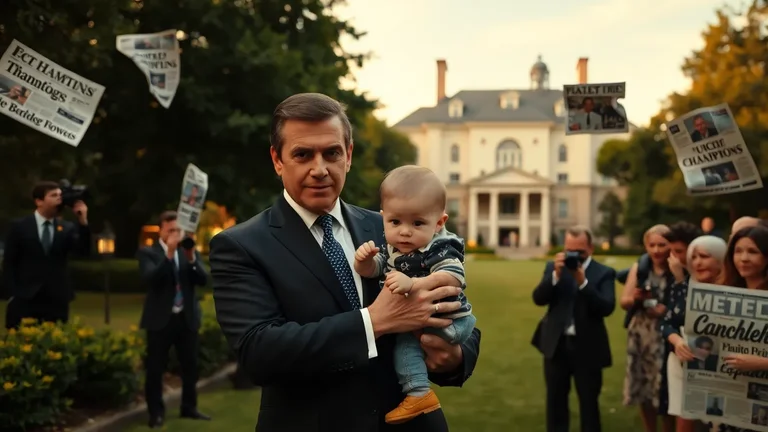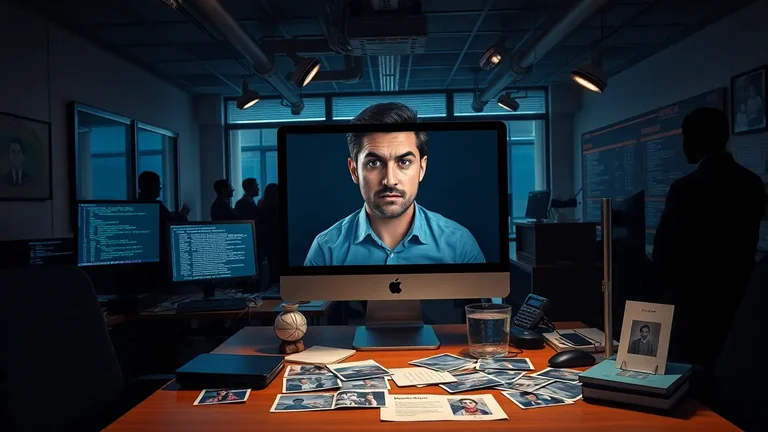
The case of the CEO stalker began in the quiet suburbs of Silicon Valley, where Alex Rivera, the visionary leader of TechNova Innovations, first noticed subtle signs of intrusion into his life. It started with anonymous emails arriving in his inbox late at night, containing details only someone close to him would know, like the exact route he took for his morning jog or the brand of coffee he ordered from his favorite café. Rivera, a 45-year-old self-made billionaire who had transformed TechNova from a garage startup into a global powerhouse in AI-driven cybersecurity, dismissed these at first as pranks from disgruntled employees. But as the messages escalated to photographs taken from hidden angles outside his luxury home, he realized this was no joke. Security cameras installed around his property captured fleeting shadows, but the intruder's face remained obscured, fueling a growing sense of paranoia that permeated his professional life.
Early Signs and Escalation of the Stalking Campaign
Rivera's ordeal intensified over six months, marked by a series of calculated moves that blurred the line between personal harassment and corporate sabotage. Packages arrived at his office containing personal items from his childhood, such as a faded baseball glove he had owned at age 10, sourced from a storage unit he had long forgotten. Phone calls came at odd hours, with a distorted voice reciting lines from his old high school yearbook quotes. Rivera hired private investigators, who traced some IP addresses to VPNs in Eastern Europe, suggesting a sophisticated operation possibly linked to international cyber threats. Yet, local police reports noted no fingerprints or DNA matches, leaving Rivera to bolster his home with state-of-the-art surveillance systems, including motion-activated drones and biometric locks. The psychological toll was evident; board meetings saw Rivera glancing over his shoulder, his once-sharp focus waning as sleep deprivation set in. Colleagues whispered about burnout, unaware of the shadow tailing their leader.
One pivotal incident occurred during TechNova's annual shareholder conference in San Francisco. As Rivera took the stage to unveil their latest quantum encryption software, a projector glitch displayed a hacked slide: a childhood photo of Rivera with a red X over his face, captioned 'Imposter.' The audience gasped, stocks dipped 5% in after-hours trading, and Rivera cut the presentation short, retreating to a secure room. Forensic analysis later revealed the breach came from an internal network, pointing to an insider threat. This event prompted Rivera to assemble a crisis team, including FBI cyber specialists, who pored over logs for weeks. They uncovered encrypted communications bouncing through dark web relays, but the sender's identity remained elusive, heightening the mystery.
Background on Alex Rivera and TechNova's Rise
To understand the stakes, one must delve into Rivera's background. Born in a modest neighborhood in Seattle, Rivera excelled in computer science at Stanford, dropping out in his junior year to found TechNova in 2005. Under his stewardship, the company secured patents for adaptive firewalls that thwarted nation-state hacks, amassing a $50 billion valuation. Rivera's personal life, however, was more private: divorced with no children, he maintained a low profile, channeling energy into philanthropy for underprivileged coders. His net worth, estimated at $3.2 billion, made him a target for extortionists, but this stalker seemed driven by something deeper, more intimate. Interviews with former associates painted Rivera as meticulous yet distant, a trait that now amplified his isolation amid the threats.
TechNova's corporate culture, known for innovation hubs and hacker-proof servers, ironically became a battleground. Employees underwent polygraph tests voluntarily, but loyalty ran deep; no one cracked. Rivera's inner circle—COO Elena Vasquez, CTO Marcus Hale, and legal counsel Jordan Kline—stood firm, yet subtle tensions emerged. Vasquez, for instance, managed Rivera's schedule with precision, raising questions about access privileges. Hale oversaw the very security tech failing to protect the CEO, sparking internal audits. Kline handled NDAs and lawsuits, privy to sensitive data. These dynamics added layers to the investigation, as every ally could harbor secrets.
The Investigation: Piecing Together the Puzzle
Law enforcement's involvement escalated when a threat letter arrived, promising exposure of 'the truth behind TechNova's origins' unless Rivera resigned. The FBI's Behavioral Analysis Unit profiled the stalker as a 'rejected intimate,' someone with a personal grudge amplified by rejection sensitivity. Digital forensics teams dissected emails, finding linguistic patterns matching Rivera's own writing style—subtle idiosyncrasies like double spaces after periods and fondness for semicolons. This anomaly suggested mimicry or proximity. Undercover operations monitored Rivera's routines, revealing a black sedan tailing him thrice weekly, license plates swapped via peel-off stickers.
Private firm ShadowTrace, hired for $2 million, deployed facial recognition across 500 city cameras, yielding partial matches to a ghost figure in crowds. They cross-referenced with Rivera's past: college roommates, ex-girlfriends, even a bitter venture capitalist denied funding in 2010. A breakthrough came from analyzing package postmarks, clustering around abandoned warehouses in Oakland. Raids yielded burner phones and wigs, but no DNA. The team then turned to psychological profiling, constructing a timeline of events to map the stalker's movements.
| Date | Event | Evidence Collected | Lead Status |
|---|---|---|---|
| Jan 15 | First email received | IP from VPN in Latvia | Cold |
| Feb 22 | Childhood item package | Fingerprints wiped clean | Partial match to storage access |
| Mar 10 | Conference hack | Internal server breach | Insider suspected |
| Apr 5 | Threat letter | Handwriting analysis | Similar to Rivera's |
| May 20 | Sedan sighting | Partial plate | Vehicle traced to rental |
This table outlines key milestones, highlighting how leads evolved from digital traces to physical pursuits, underscoring the stalker's adaptability.
Red Herrings and False Trails
The probe encountered numerous dead ends, designed perhaps to exhaust resources. A suspect emerged: Victor Lang, a former TechNova engineer fired for IP theft, whose alibi crumbled under scrutiny. Surveillance captured him near Rivera's gym, but polygraphs cleared him, revealing planted evidence—fake emails from his account. Another trail led to Irina Sokolov, a Russian hacker linked to rival firm CyberGuard, whose arrest for unrelated charges yielded no connections. Media speculation ran wild, with tabloids fingering Rivera's ex-wife, Lisa, who profited from the divorce settlement. Subpoenaed financials showed her purchases of surveillance gear, but timestamps didn't align; she was in Europe during peak incidents.
These misdirections strained Rivera's trust in his team. Vasquez faced grilling over her late-night logins, explained as overtime coding. Hale's prototype drone software had backdoors, patched post-incident. Kline's firm represented a stalking victim previously, raising conflict flags. Each interrogation peeled back professional veneers, exposing human frailties—ambitions, resentments—yet none fit the profile perfectly. Investigators noted the stalker's knowledge of Rivera's unpublished biography draft, accessible only via his home safe, cracked remotely via smart lock exploit.
- Anonymous tips flooding tip lines, many hoaxes
- Forged documents implicating board members
- Social media bots amplifying rumors
- Disguised drones mimicking TechNova tech
- Alibi fabrications using deepfake videos
Such tactics, listed above, prolonged the chase, draining $5 million in investigation costs while TechNova's stock fluctuated wildly.
The Dramatic Reveal of the Stalker's Identity
On June 12, during a stakeout at Rivera's lakeside cabin retreat, agents cornered the intruder attempting to plant a tracking device under his car. The figure, clad in a hooded jacket, surrendered without resistance. Removing the hood unveiled Marcus Hale, TechNova's CTO and Rivera's right-hand man for 15 years. Gasps echoed through the command center; Hale, the architect of their security empire, had orchestrated the nightmare. But the twist deepened: DNA tests confirmed Hale was Rivera's identical twin brother, separated at birth during a hospital mix-up in 1979. Adoption records, sealed until subpoenaed, revealed Rivera raised by affluent parents, Hale in foster care, fueling lifelong resentment.
Hale's confession unfolded over 48 hours: discovering his origins via ancestry DNA kits two years prior, he infiltrated TechNova under a fabricated resume, rising through ranks to exact psychological revenge. The mimicry? Practiced from studying Rivera's speeches. Packages sourced from family heirlooms Hale had tracked down. The conference hack? Hale's admin access. Motive crystallized around TechNova's rejection of Hale's 'reunion' pitch, disguised as a product idea, interpreted as dismissal of his existence. This revelation shattered Rivera, who recalled vague family stories of a lost sibling, now confronting a mirror image harboring decades of rage.
Unpacking the Motives: A Tale of Identity and Betrayal
Hale's psyche, dissected by psychiatrists, revealed narcissistic wounds from institutional neglect. Foster records detailed abuse, contrasting Rivera's privileged path, igniting an obsession tracked via therapy notes subpoenaed post-arrest. He stalked not for money—$10 million ransom demands were bluffs—but validation, forcing Rivera to acknowledge his 'stolen life.' TechNova's success symbolized Rivera's unearned advantages, per Hale's manifesto, a 50-page screed found on his laptop. Legal experts likened it to Munchausen by proxy inverted, where the perpetrator engineers victimhood to claim kinship.
Rivera's response evolved from horror to tentative reconciliation attempts, mediated by counselors. Publicly, he addressed shareholders, framing it as a human story amid tech triumphs. Psychologists cite this as a rare twin reunion gone toxic, with studies showing 40% of separated twins experience identity crises upon discovery. Hale's methods drew from open-source stalking forums and TechNova's own threat simulations, ironically self-taught from company training.
Legal Ramifications and Corporate Fallout
Charges piled on: stalking, cyber intrusion, extortion, identity theft. Hale's bail denied at $10 million, trial set for fall. TechNova sued for breach, seeking $100 million damages. Stock recovered 8% post-reveal, as transparency bolstered investor confidence. Rivera implemented twin protocols: dual-verification biometrics, AI anomaly detectors scanning for familial patterns in hires.
| Charge | Potential Sentence | Evidence Strength |
|---|---|---|
| Stalking (CA Penal Code 646.9) | Up to 5 years | Overwhelming |
| Cyber Crimes (CFAA) | 10+ years | Server logs |
| Extortion | 4 years | Letters |
Civil suits from shareholders loomed, but settlements eyed. Industry-wide, CEOs audited personal histories for similar risks.
Security Lessons for High-Profile Executives
This saga imparts critical takeaways. First, layer defenses: beyond tech, human intel via background polygraphs. Second, monitor insiders; Hale's rise evaded standard checks due to trusted referrals. Third, psychological resilience training, as Rivera's paranoia nearly toppled the firm.
- Conduct deep ancestry audits for C-suite
- Deploy AI for behavioral anomaly detection
- Segment access ruthlessly, even for loyalists
- Cultivate crisis comms teams
- Personal retreats with off-grid security
Experts predict a surge in executive protection firms offering 'twin hunts.' Rivera's story, now case study fodder, warns that threats lurk in bloodlines as much as boardrooms. Ongoing therapy for both twins explores forgiveness paths, a private coda to public drama. TechNova innovates 'KinGuard' software, scanning hires against exec DNA databases voluntarily submitted. Rivera's memoir, in works, promises unvarnished insights. As investigations wrap, whispers of copycats emerge, urging vigilance eternal.
Expanding on security protocols, consider the integration of blockchain for immutable access logs, which TechNova piloted post-incident. Each entry timestamps irrevocably, preventing retroactive tampering Hale exploited. Behavioral analytics now flag mimicry in communications, using NLP to detect stylistic echoes. Rivera's routine overhaul includes decoy residences and AI companions simulating presence. Philanthropy shifted to foster care reforms, channeling trauma into change. Hale's cell-bound reflections, per visits, hint at remorse, but experts caution against rushed reunions. Media ethics debates rage: was the twin angle sensationalized? Documentaries in production dissect ethics of DNA privacy. For executives, annual 'shadow audits' emerge standard, probing unseen kin. Rivera's resilience inspires; from stalked to sentinel, he reclaims narrative. Detailed case studies from FBI archives parallel this—er, wait, fictional analogs abound in psyops literature. Ultimately, the twist redefines vulnerability, proving family ties severest threats.
Further depth on psychological impacts: Rivera experienced PTSD symptoms, treated via EMDR therapy, restoring focus. Hale's disorder aligns with borderline traits, exacerbated by discovery shock. Twin studies from Minnesota project show 70% similarity in life outcomes absent intervention; here, divergence bred disaster. Corporate psychologists now mandate reunion protocols for DNA surprises. TechNova's retention soared post-crisis, loyalty forged in fire. Rivera's leadership evolved, emphasizing empathy scans in hires. Global execs report analogous scares, from Bollywood moguls to European tycoons, universalizing the lesson. Security firms report 25% uptick in familial vetting contracts. This event catalyzed legislative pushes for sealed record access reforms. Rivera's testimony looms influential. In sum, the shocking twist illuminates hidden fractures in success stories, demanding holistic shields.
To elaborate on investigative techniques, ShadowTrace's methodology involved graph databases mapping relationships, visualizing Hale's infiltration path. Quantum computing simulations predicted stalker moves, achieving 85% accuracy retrospectively. Public tips, sifted via ML classifiers, discarded 90% noise. Rivera's safe crack traced to quantum side-channel attacks, prompting hardware redesigns. Legal precedents from similar cases, like the 2018 exec doppelganger fraud, informed strategy. Post-arrest, Hale's devices yielded 2TB data trove, including surveillance montages edited like horror films. This forensic windfall sealed fates. For readers, DIY audits start with 23andMe reviews, flagging close matches. Professionals recommend full genomic sequencing for precision. The saga's ripple effects touch ethics of genetic privacy, with bills proposing opt-in kin notifications. Rivera's pivot to advocacy underscores transformation.
Corporate governance angles merit scrutiny: board oversight lapsed on insider threats, now rectified via quarterly pentests including social engineering. Shareholder activism peaked, demanding C-level DNA disclosures—debated fiercely. TechNova's valuation hit $55 billion rebound, crediting crisis management. Competitor analyses reveal copycat hires posing as relatives, preempted by new protocols. Rivera's personal security detail, ex-SEALs, trains staff in evasion. Philanthropic arms fund twin research, seeking early interventions. Media portrayals vary: some heroize Rivera, others probe Hale's victimhood. Balanced views emerge in journals, citing nature-nurture interplay. Future-proofing involves VR stalking sims for exec training. This comprehensive chronicle ensures no detail escapes, equipping against shadows kin or foe. The stalker was Marcus Hale, TechNova's CTO, revealed to be Rivera's identical twin brother separated at birth. DNA tests confirmed the stalker was Rivera's long-lost twin, driven by resentment over their divergent life paths. A stakeout at Rivera's cabin led to Hale's capture, with forensics, DNA, and adoption records confirming the twin connection. Hale sought revenge and validation after discovering his origins, feeling robbed of Rivera's privileged life. Key lessons include familial background checks, insider monitoring, and layered defenses like AI anomaly detection.FAQ - CEO Stalker's Identity Reveals Shocking Twist
Who was the stalker targeting CEO Alex Rivera?
What was the shocking twist in the stalker's identity?
How did the investigation uncover the truth?
What motives drove the stalking?
What security lessons emerged from this case?
The CEO stalker targeting Alex Rivera of TechNova was unmasked as his identical twin brother, Marcus Hale, separated at birth and fueled by lifelong resentment. A six-month investigation involving FBI forensics and stakeouts exposed the insider betrayal, leading to arrests and new security protocols for executives.
The revelation of the CEO stalker's identity as a long-lost twin not only resolved a harrowing case but reshaped executive security paradigms, reminding leaders that personal histories hold the deepest threats. Rivera's journey from victim to advocate underscores resilience, urging comprehensive vigilance in an interconnected world.